
Safety & cables
Mounted safely, wired invisibly
A TV install is a structural job as much as a cosmetic one. Here's how we treat both.
Safety standards
Load-rated hardware
Bracket and anchors are selected for the screen's weight and the wall's construction — not whatever came in the box.
Structure first
We anchor into studs, blocking, concrete or block. Hollow drywall alone is never the load path for a television.
Heat clearance
Above-fireplace installs are reviewed for heat exposure and mantel depth; a pull-down or tilt mount is recommended when needed.
Obstruction scanning
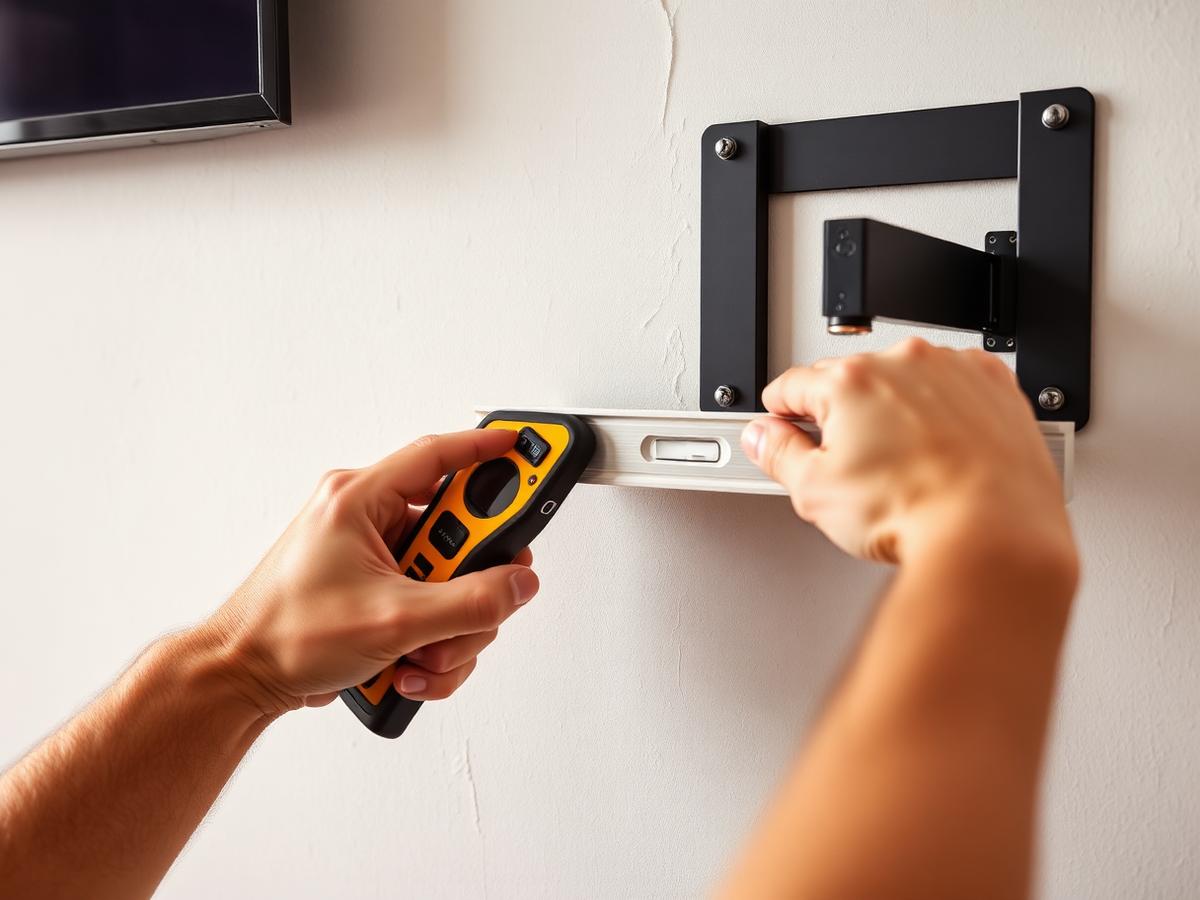
Walls are scanned for wiring, plumbing and conduit before drilling to avoid damage behind the surface.
Full-motion range test
Articulating arms are cycled through their full travel to confirm clearance from corners, doors and furniture.
Child and pet safety
Cables are secured out of reach and hardware is torque-checked so nothing hangs loose or gets pulled.
Cable management
In-wall routing kits
Power and signal cables run inside the wall using in-wall rated components and a recessed outlet behind the screen.
Paintable raceway
Where in-wall routing isn't appropriate — concrete, block, or rentals — a slim raceway channel blends into the wall and can be painted.
Labeled inputs
HDMI runs are labeled so future device swaps take a minute, not an afternoon.
Slack management
Cables are left with proper service loops so the mount can extend without strain on connectors.
Want the cables gone?
Tell the assistant your wall type and we'll recommend in-wall routing or a paintable raceway.